

FLOWER OF THE DAY: FORSYTHIA
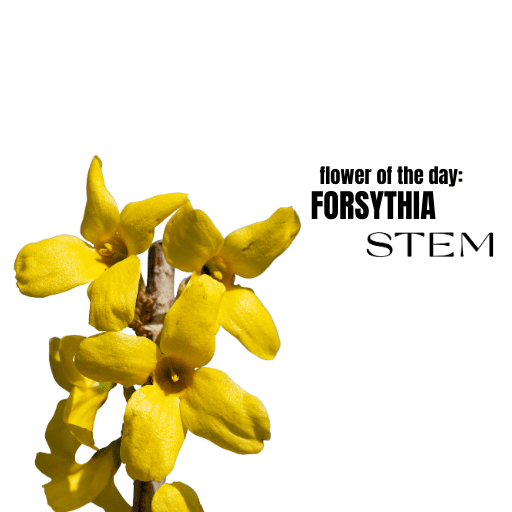
Today’s Flower of the Day at Stem Design is the vibrant Forsythia, a shrub that’s celebrated for its striking yellow blooms. Known as one of the earliest signs of spring, Forsythia’s bright flowers are a cheerful reminder that warmer days are on the way. This hardy plant brings an unmistakable splash of colour, making it a favourite for gardens and floral arrangements alike.
HISTORY AND ORIGINS OF FORSYTHIA
Forsythia, belonging to the Oleaceae family (the same family as olives), is native to Asia and southeastern Europe. Named after the Scottish botanist William Forsyth, who helped introduce it to European gardeners in the 18th century, Forsythia quickly became beloved for its hardiness and vibrant blooms. Its golden-yellow flowers have become synonymous with early spring, particularly in temperate climates.
POPULARITY AND TRENDS
Forsythia is popular not only for its beauty but also for its resilience and adaptability. As a sign of spring’s arrival, it’s often used in landscaping for hedges and borders, where it makes an eye-catching statement. In recent years, Forsythia has also gained popularity in floral design, especially for creating dramatic centerpieces or adding bold color to arrangements. With trends leaning towards natural, wildflower-inspired styles, Forsythia’s free-flowing branches and vivid color are a perfect fit.
TOP VARIETIES OF FORSYTHIA
Forsythia comes in a few varieties, each with its unique characteristics:
- Forsythia x intermedia. This is one of the most popular varieties and is a hybrid known for its profusion of bright yellow flowers and arching branches.
- Forsythia suspensa (Weeping Forsythia). This variety features a more cascading growth habit, making it ideal for adding a delicate, trailing effect in arrangements.
- Forsythia ovata (Korean Forsythia). Known for its early bloom time, this variety’s flowers appear even before the leaves in early spring, creating a stunning visual display.
CARE TIPS FOR FORSYTHIA
Whether you’re planting Forsythia in the garden or incorporating it into floral designs, here are some tips for keeping it vibrant:
- Sunlight. Forsythia thrives in full sunlight but can tolerate partial shade. More sun leads to more abundant blooms.
- Watering. Water Forsythia regularly but allow the soil to dry slightly between waterings. Established plants are drought-tolerant.
- Pruning. Prune Forsythia after it blooms to maintain its shape and encourage next year’s growth. Avoid pruning too late, as this may reduce blooms in the following spring.
- Soil. Forsythia prefers well-draining soil, but it can adapt to a wide range of soil types, making it an easy addition to most gardens.
INCORPORATING FORSYTHIA INTO FLORAL ARRANGEMENTS
In floral arrangements, Forsythia branches are ideal for adding height and a burst of color. Their bright yellow flowers make an impact as a standalone statement in a tall vase or as part of a larger, mixed arrangement. Forsythia’s wild, arching branches also add a touch of rustic charm, making it popular in spring wedding arrangements, centerpieces, and seasonal bouquets.
THE STEM DESIGN DIFFERENCE
At Stem Design, we love incorporating unique seasonal blooms like Forsythia into our floral creations. If you’re looking to add a bright, cheerful touch to your space or special event, our team can create a custom arrangement featuring this gorgeous plant. Contact us today to bring the vibrant energy of Forsythia to your floral designs.


Comments are closed.