Floral Design
On scale: designing flowers for grand rooms
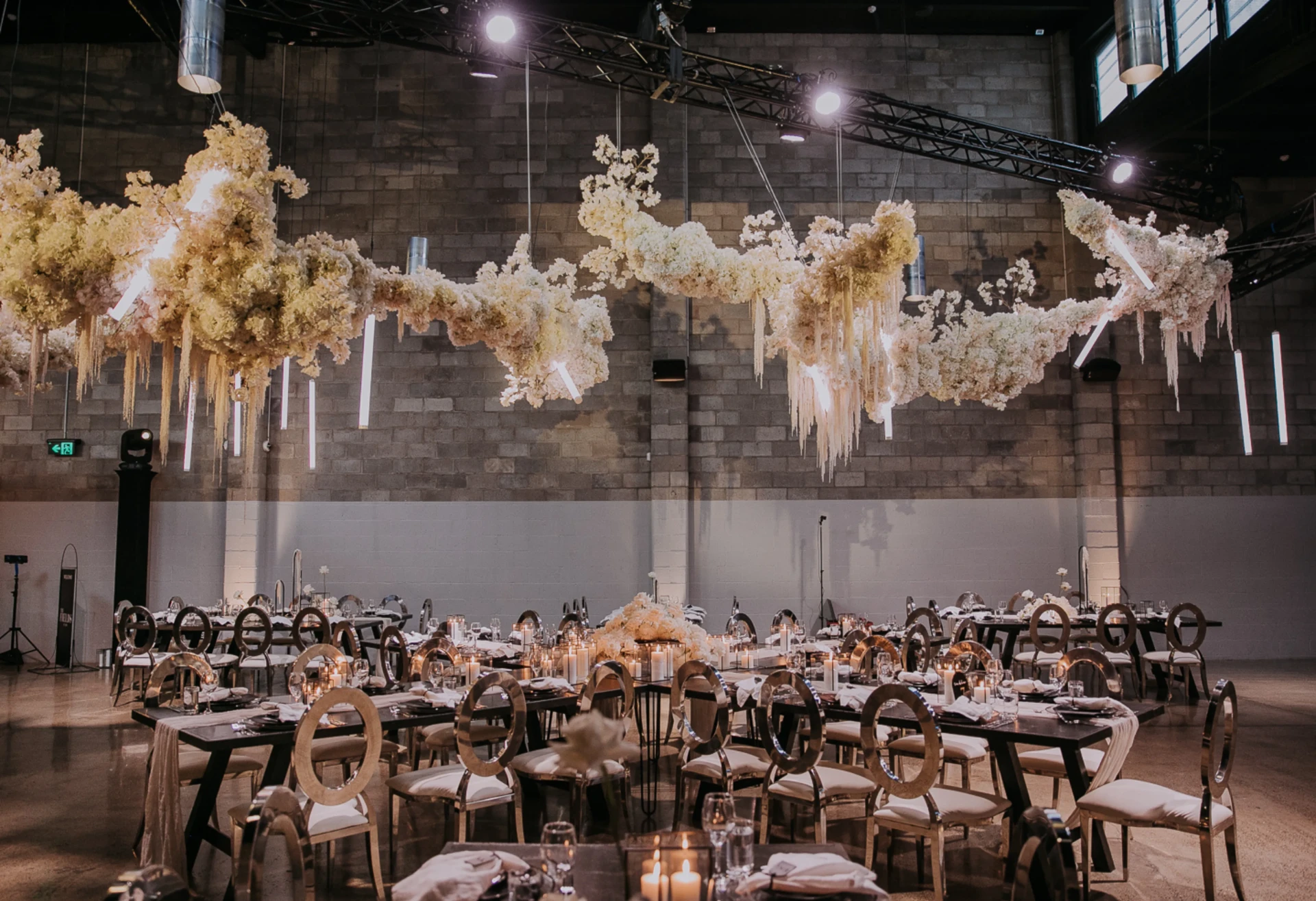
Large spaces require much more than just using larger flower arrangements. There is more subtlety in creating large-scale floral designs. Large rooms often consume or engulf an arrangement that feels large in other areas of the room. However, simply adding additional flowers may not be the solution either. We need to consider proportions, architecture, visual lines of sight and how individuals will travel through a space as we create our designs for large venues.
As we begin designing with flowers for a large area, we assess the space first; next we evaluate the flowers themselves. When walking into this new space what does your eye go to? What are some of the most defining architectural elements? Does it have a high ceiling, long hallways etc.?
What is the nature of the room? What are the lines and shapes that form it?
Whether you call it a "staircase" or a "stage", or whether your eye sees it as a row of windows, all of this will help you decide which way to place your flowers.
When we look at large rooms, our desire for flowers typically is to see them relating more to the architectural elements in the room than being confined by those elements.
That means putting some distance between the table and where the flowers are located so that when people walk around either side of the tables, they can see both up close (the actual arrangement) and from afar (as part of an overall design). This allows us to create visual interest through sculpture using branches; or, we can suspend items to add another dimension; or allow the flower arrangement to flow along a wall and/or doorway(s).
Ultimately, what we want to achieve here is create enough mass/visual impact that the flowers become a legitimate member of the space but don't dominate it.
Negative space is every bit as important as positive/volume.
One of the most frequent mistakes when decorating a large space is trying to fill every area. If all spaces are filled in an attempt to decorate, it will make everything feel unimportant and therefore less impactful. Rather than filling the entire room, it is usually better to focus on identifying one or two areas that you wish to draw attention to and leaving the majority of the room empty so that there can be "breathing" space.
Large-scale floral installations can be very effective for this reason. The quieter surrounding environment (due to lack of decorations) creates a larger sense of drama for the arrangement itself.
Additionally, how much detail your viewers will see may depend upon their view angle/position relative to your arrangement. For example, a floral installation located at the far end of a ballroom will need to be legible from across the room while those same flowers would have been closer (about 1 metre) as people walk through the space.
You want to create something that is successful at both the far distance and close-up. The distant view will be about the overall silhouette. With the silhouette, it has to have enough colour, enough shape and enough motion so people can see it. As you get closer, it’s now about detail. It’s about how much texture is in each flower individually; what happens when one stem overlaps another; if there are different types of leaves used as foliage; or even the little things that look like they're going to fall off and give a sense of life.
The difference with large-scale floral arrangements isn’t just size, but multiple levels of visual data. In a larger space (such as an auditorium), where there may be long dining tables, oversized architectural elements, large bars, stages etc., the relationship between flowers and furniture becomes more relevant.
Having too many flowers in a single table can be overwhelming and may cause the arrangement to feel disengaged from its surroundings. However, using a series of separate but evenly spaced floral arrangements can create an overall feeling of rhythm throughout the space and will direct your guest's eyes through the room.
In some cases, there are no better options than having one show stopping arrangement; sometimes this means creating a number of similar arrangements that when combined together create a stronger visual line.
When using multiple small floral arrangements, making them all appear as larger displays is possible by focusing on creating a unifying element (i.e., repeating the same flower or colour) among each display. When doing so, guests will perceive the entire space as being thoughtfully designed although none of the individual displays are necessarily large.
The use of different heights can also help to add balance to your design.
You can also use elevated displays to create a connection from the dining area to a high ceiling. Hanging flower or greenery is an alternative way to help visually bring down the size of a large event space while still maintaining the feeling of intimacy within it. The main advantage in utilizing suspended installations is they will fill what would normally be dead, unused space.
Additionally, you don't have to move tables or furniture for them so they allow you to change the ambiance of a room without losing table space.
But, as beautiful as a dramatic floral design may look (and I mean very dramatic), behind every one of those moments is a lot of hard work and planning. There are many things that need to happen before you get your "wow" moment. Some examples include; rigging, access, weight considerations, water requirements (for plants), transportation and logistics related to installing the piece on time. In fact, some of the most seemingly easy-to-create designs often require the most detailed planning prior to execution.
The specifics of what your location permits is important.
Where can we support weight at this venue? How will we be able to safely put in our arrangement? Are the flowers going to remain fresh for the entire event?
These details are critical factors that will affect how you design long before you begin constructing with stems.
Flowers also play an important role.
There are certain types of flowers that inherently produce volume: hydrangea, chrysanthemum, dahlia (the larger varieties). These flowers can rapidly create a solid foundation. There are others which can contribute to creating line or movement through your floral arrangement: delphiniums, snapdragons, orchids and flowering branches. These elements may assist in leading one's eyes past the centre piece and out into other areas of the space.
You then have flowers that you would likely use less frequently as focal point type items.
A single unusual flower in the appropriate location will sometimes be more impactful than an additional armful of stems.
Colour can as well influence the perception of scale. Strong, vibrant colour generally provides a better reading at a distance. Pale-coloured flowers provide for an atmosphere and softness to the overall environment.
There is no "right" or "wrong".
The selection palette is based on the architectural features; lighting conditions; and overall ambiance desired for that event.
Lighting affects how all plants appear in very large spaces (regardless if we want them to). The appearance of the plants are dramatically altered when viewed during natural daylight compared with warm evening light or dramatic event lighting.
When an arrangement appears pale and very delicate in the daylight, it can quickly turn into a dramatic and powerful sculpture as soon as it is darkened by evening.
In every case we take into consideration how the environment or space that the event will take place in will look at different times of day (or night).
An opulent setting does not have to be something that one has to overcome when designing; rather, it should be considered part of your design process.
Floral arrangements are successful when they don’t compete with their surroundings. Rather, they understand what exists within those surroundings and use that information to create a cohesive experience.
When floral arrangements are proportionate to their surrounding architecture, the flowers appear natural and seem destined for where they exist.
They enhance the spaces which contain them by creating movement through the space; generate surprising moments while still maintaining a sense of completion without being overwhelming.